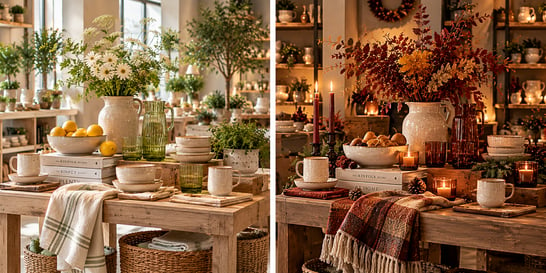
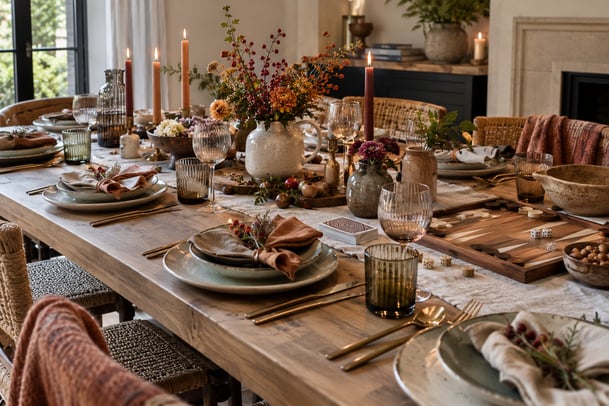
Categories are useful. They help you make sense of an assortment, plan your buying and give every product somewhere to belong. But customers do not always see those boundaries.
Think about a slow Saturday morning at home. Coffee is brewing, music is on and there is finally time to finish the book that has been sitting untouched all week. A coffee cup, portable speaker and book light may live in completely different parts of a store, but in that moment they make perfect sense together.
That is the opportunity: categories organize products, but occasions connect them. Looking at your assortment this way opens up a more creative side of retail, where what belongs together is shaped by the part it plays in someone's life rather than simply by what it is.
1. Build around moments people recognize
Most stores are naturally organized around product type. That structure makes shopping easier, particularly when someone already knows what they want. But it is less useful for the customer who only has a rough idea in their head.
Imagine the first properly rainy day after summer. A puzzle suddenly makes sense near a beautiful tea set. A reading lamp from another part of the store fits the same mood. None of this needs to become an official "rainy day" collection. Together, it simply makes the moment easier to picture.
That is what makes occasion-based merchandising interesting. A customer does not have to know exactly what they are looking for. They can recognize themselves in the moment instead. It also gives you another way to
bring fresh energy to your assortment without assuming that fresh always has to mean new.
2. Extend the life of your products
There is another benefit to thinking beyond categories: products become less fixed. Take a carafe. During summer, it belongs naturally on an outdoor table. Later in the year, beautiful packaging might make it an easy new-home gift. The product stays exactly the same, while the reason someone might want it changes.
That flexibility can extend the life of a good product in your store. Instead of assuming it has had its moment because a season or display has moved on, consider whether there is another side to it that customers have not seen yet. A small change in perspective can give something familiar a completely different role.
3. Leave room for the unexpected
Starting with a specific product category is useful when you know exactly what you need. But when you are looking for inspiration, it can also limit what catches your eye. Browsing with a more open mind can lead you to a brand or product you would never have thought to search for, yet instantly see a place for in your store. With Connect & Grow Autumn/Winter '26 coming up on the Orderchamp Marketplace, there is a natural opportunity to explore brands you might not usually come across and see what stands out before deciding exactly what you need.
4. Ask what it adds, not just where it goes
This way of thinking can also change how you judge whether a product belongs in your assortment. When something catches your attention at a trade show or on a wholesale Marketplace, the first question is often practical: Where would I put this? If there is no obvious answer, it can be tempting to move on. But perhaps "where does it go?" is not always the most interesting question. A better one might be: What could this add?
It could bring a playful edge to an otherwise polished assortment or offer an easy way into a trend that would otherwise feel too bold. Sometimes its value is simply that you have not seen anything quite like it elsewhere. Not everything worth stocking needs to fit neatly into a space you have already created for it. Sometimes it earns that space by bringing something different.
5. Make the assortment feel like yours
Categories might determine how your assortment is organized, but they are not what gives your store its character. That comes from the choices you make within them and the connections you create across them. Two stores can sell many of the same types of products and still feel completely different. What you bring together, what you give space to and what you choose to introduce next all shape the point of view customers come to recognize as yours.
Your assortment, your point of view
There is no formula for an assortment people remember. What makes it interesting is the personality behind it: the unexpected find you took a chance on, the brand customers cannot find everywhere else and the choices that make someone immediately recognize your store. A distinctive store takes shape through the choices you make along the way. Each product you believe in adds something to the bigger picture, gradually building an assortment with a character customers can recognize and come back for.
Categories will always have their place as they bring order to everything you have chosen. But they are only the framework, with the character coming from what you build within it. Use categories for the structure, then make the rest your own.

.svg)